

· For Parents
Is It Safe to Send My Teenager to Ireland Alone? A Parent's Honest Answer
Ireland is one of Europe's safest countries, but the program matters more. Nine safety questions to ask, and how ILE supervises teens 7:1 for 25 days.
Read more· Taryn Harrison · 4 min read
Study abroad in high school helps a college application indirectly but meaningfully: it does not add a credential admissions offices score, but it reliably produces three things they do read — a specific essay, a stronger teacher reference, and evidence of independence. The Irish Life Experience (ILE), a 25-day graded summer program in Ireland for students 14–18, is the kind of program that produces all three. Here is what admissions readers actually weigh, what a summer abroad does and does not do, and how to make it count on the application.
Download the 2027 Parent Guide — includes the syllabus and grading rubric you can show a school counselor.
Download the 2027 Parent Guide →Selective colleges read applications holistically: grades and rigor first, then test scores where used, then the essay, recommendations, and activities. A summer program lands in the last three. It does not change a GPA. What it changes is whether the student has something to say.
Admissions readers see thousands of essays about "a trip that changed my perspective." The ones that work are specific: a 16-year-old who learned enough Irish to be understood on Inis Mór, who got a food budget in Galway and cooked for four roommates for a week, who stood in Kilmainham Gaol after a month of Irish history classes and understood what she was looking at. Specific experiences produce specific essays. Bus tours produce generic ones.
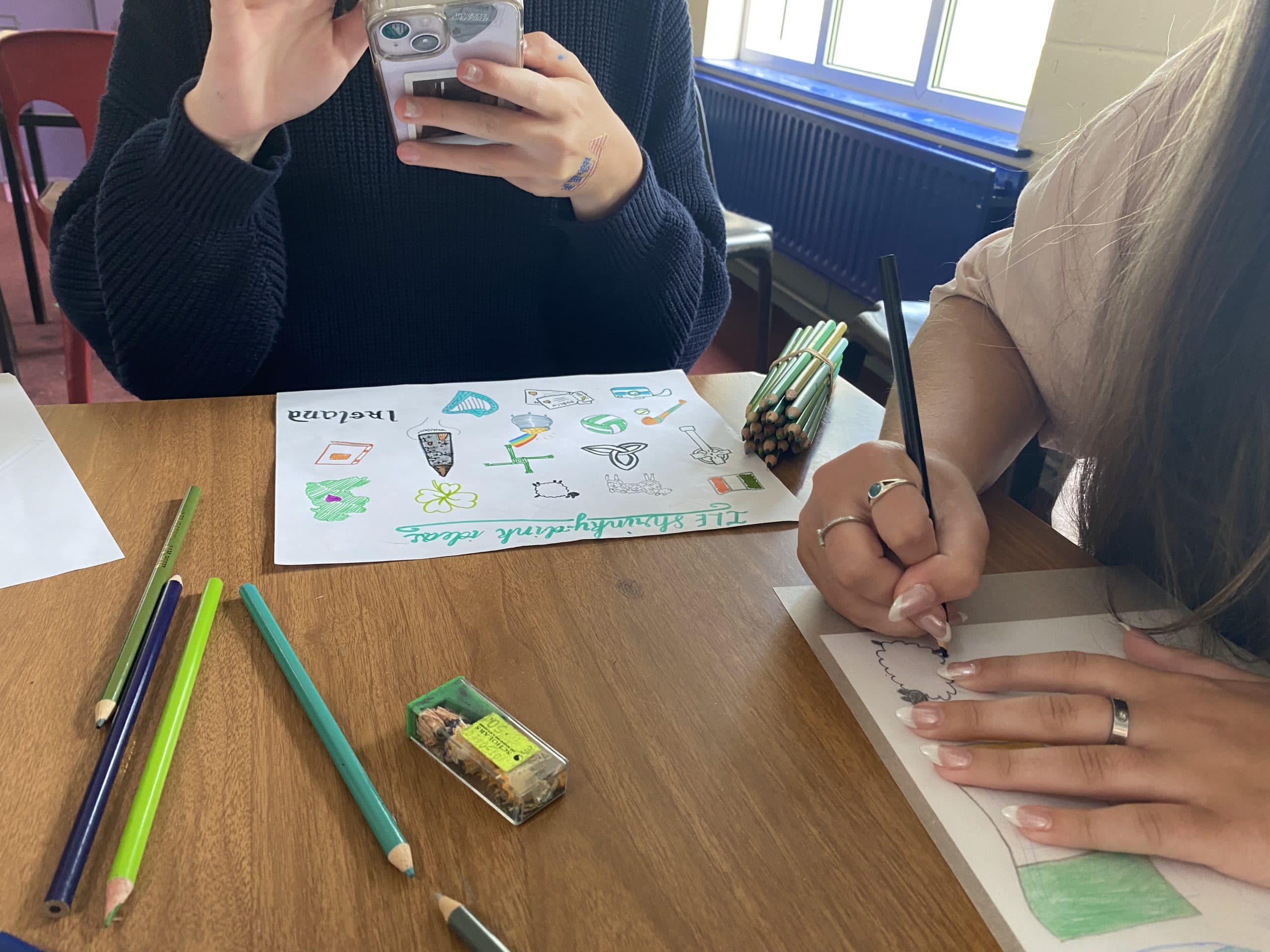
1. An essay with details in it. ILE students take graded classes in Irish language, history, Irish-American history, literature, dance, and drama, complete three workshops, and give a drama presentation. Twenty-five days of that generates material. Common App prompt 5 ("an accomplishment, event, or realization that sparked personal growth") and prompt 6 ("a topic so engaging you lose track of time") are the usual homes for it.
2. A better reference. ILE's application requires a teacher and a counselor recommendation. That means a junior-year teacher has already written about your student once, knows what they did with the summer, and can write a sharper college letter in the fall. Students should send that teacher a two-paragraph note in August: what they studied, what surprised them.
3. A grade and a syllabus. ILE issues a grade based on attendance, participation, note-taking, the drama presentation, and three workshops, and provides a syllabus. Many high schools accept it for elective credit; some list it on the transcript. Ask your counselor in September, before the transcript is finalized.
Want to know how ILE alumni have used the summer on applications? Taryn has read the essays — book 15 minutes.
Book a call with Taryn →The thing admissions readers cannot see on paper but notice in interviews and essays is whether a 17-year-old can operate without their parents. Twenty-five days in another country, with adults nearby but not hovering — navigating a city with a map, managing €150 for a week of groceries, getting homesick on day five and over it by day eight — is a controlled version of the first month of college. Parents tell us, year after year, that their child came home different. Eileen G. of Brooklyn: her daughter "came home seeming much more mature and independent." That maturity shows up everywhere on an application without being named.
| When | Do this |
|---|---|
| During the program (June 28 – July 23) | Keep a short daily note on the phone: one thing learned, one thing that surprised. Twenty-five lines becomes the essay. |
| August | Email the recommending teacher and counselor: three sentences on what you studied and what stuck. |
| September | Give the counselor the ILE syllabus and grade; ask about elective credit and transcript listing. |
| Activities list (fall of senior year) | List it as "Irish Life Experience — 25-day graded study program, Ireland" with the classes and the hours, not as "travel." |
| Essay drafting | Pick the specific day, not the trip. |
Does study abroad in high school look good on college applications? It helps indirectly. It does not add a scored credential, but it reliably gives the student a specific essay, a stronger teacher recommendation, and demonstrated independence — all of which admissions readers weigh.
Can my teen get high-school credit for the Irish Life Experience? ILE issues a grade and a syllabus. Many schools award elective credit; the decision is the school's. Ask the counselor in September.
What summer programs look best on college applications? Programs with structure the student can describe: classes, assessment, responsibility, and time away from parents. Programs that are only sightseeing add little.
Is the summer before junior year or senior year better? Before junior year gives the teacher a full year to know the student afterward; before senior year gives the freshest essay. Both work. ILE accepts students from the summer after 8th grade through the summer after 12th.
Summer 2027 is June 28 – July 23 and the final application deadline is April 1. Apply — and ask your teacher for the recommendation this week.
Apply for Summer 2027 →Planning a summer in Ireland for your teen? Start with A Parent's Guide to Summer Programs in Ireland for High School Students.

Ireland is one of Europe's safest countries, but the program matters more. Nine safety questions to ask, and how ILE supervises teens 7:1 for 25 days.
Read more
Teen summer abroad programs run $3,500–$8,000. What drives the price, what's left out, and the line-by-line cost of ILE's 25 days in Ireland ($6,050).
Read more
What to check before you pay a deposit, and how ILE's 25-day Ireland program works: ages 14–18, $6,050 from Boston, airfare included. Apply by April 1.
Read more